
The career bureaucrat-turned-central banker walked into the 19th floor corner room of the Reserve Bank on December 12, 2018. Since February 2019, the Das-led RBI has cut the repo rate by a whopping 135 basis points to support the sagging growth, including an unprecedented 35 bps reduction in August. As he completes one year at the helm, woes in the NBFC sector, overall health of the banking sector and steeply falling economic growth are among the major challenges that needs to be tackled sooner than later.

Corporation Bank is the biggest beneficiary of this round of capital infusion with Rs 9,086 crore of funding, followed by Allahabad Bank with Rs 6,896 crore.

Is the worst over for Indian banks? The past two years saw them ride on treasury trades as deposits soared and credit growth dipped sharply. Gross and net non-performing assets (NPAs) moved south, and the provision coverage ratio (PCR), capital buffers, and profitability indicators are back at pre-pandemic levels. So, what's the plot ahead?

The incoming government will have to encourage private investments, bring down cost of capital
'Trust your new governor,' Omkar Goswami advises RBI Deputy Governor Viral Acharya. 'Just because he is from the IAS and doesn't carry a PhD from a US university does not make him unsuitable for the task.' 'If anything, Das will pour oil on troubled waters, and save the RBI's reputation.'

Zero-coupon bonds don't give out interest but are issued at a deep discount to the face value, making it difficult to ascertain the net present value.

Heading to the third year, will Urjit Patel be busy firefighting a currency crisis? Almost no governor of the RBI managed to evade it and Patel perhaps knows it.
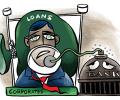
While IDBI Bank's 140 million customers and 1800-odd branches will come in handy for LIC to hawk insurance, the bank can use LIC's massive agent network to sell its retail loans. But if it is run the same way it had been in the past and LIC is a proxy of the government, then it has no future, says Tamal Bandyopadhyay.
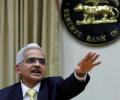
If the new governor can think out of the box even as he signals that he can bat for the RBI cadre and respect its institutional memory, that will go a long way in getting out of the current impasse.

'We try to pick up stocks early and hold onto them for the long term.' 'We are not someone who buys and sells on a daily basis.'

Last month, the bank was placed under Prompt Corrective Action due to high level of bad loans, lack of sufficient capital to manage risks and negative return on assets for two consecutive years.

Since 2014, the public sector banks' branch network in rural and semi urban has grown by a mere 4,000 while for private sector banks, it doubled from 9,673 to 18,437.

India had a transition from 'socialism with a limited entry to marketism without exit'.

The decision to do away with Rs 500 and Rs 1,000 notes accelerated the slowdown in economic activity with growth averaging 6.8 per cent in the seven quarters after it, as against an average of 8 per cent in the six quarters preceding it, says former chief economic advisor Arvind Subramanian.

The combined market capitalisation of the 21 listed PSU banks declined by about Rs 76,000 crore to Rs 425,800 crore during the month.

'Without appropriate supervisory constraints in place, banks are in a position to delay the recognition of losses and engage in ever-greening or zombie lending, which is essentially the rolling over of debts of unviable borrowers that would have otherwise defaulted,' points out RBI Deputy Governor Viral Acharya.

'Today, bankers don't want to take risks as the good decisions taken by them were not protected.' 'There is risk involved in all decisions, like businessmen taking risks in their businesses.' 'A banker must have taken a decision when the economic condition was different, and you cannot question him on the basis of the present situation in hindsight.' 'Naturally, this has affected the morale of bankers.'

India and the European Union have failed to arrive at any understanding on the four-year dispute involving two Italian marines accused of murdering two Indian fishermen

After helping the government in policymaking since October 2014, Chief Economic Adviser Arvind Subramanian is returning to academics and will be teaching at Harvard Kennedy School on a visiting position. In an interview to Dilasha Seth and Somesh Jha, he says the ease of doing business agenda needs to move forward and India must try to integrate with the global value chains. Edited excerpts.
'Every few days, I wake up with a sense of restlessness that time is running out'... 'We have created a due process for stressed assets to resolve, but there is no concrete plan in place for public sector bank balance sheets,' says RBI Deputy Governor Viral Acharya.
The Centre's proposal to call for governance reform in the RBI could, however, take a back seat, a source privy to the development said.
With the management of most State-owned banks hardly having time to concentrate on big-ticket business, growing the business of loan disbursals has been pushed down the priority order.
The banking sector's credibility is on thin ice. Unless the government takes strict steps, things could get worse.
Reserve Bank of India Governor Shaktikanta Das tells Anup Roy, Raghu Mohan and Niraj Bhatt that it is time for banks to lower interest rates and start lending to cash-starved finance companies after due credit appraisal and proper risk assessment.
 © 2026 Rediff.com - Advertise with us - Disclaimer - Privacy Policy - Sitemap - Feedback - About us - Terms of use - Grievances